While our families were here we tried to get some family shots of everyone. This is taken of Becca's side of the family at an old Spanish villa built in the 1700's in the central Andes. Yes, Madison is letting out a shout of "joy."
 Here is my side of the family on top of the world. There is a lookout point near Quito that we took both families to. It seemed to be a hit, and the views are awesome. We are at about 12,500 feet above sea level in this picture.
  You have probably read about all the rain we are getting. Yes I know that I live in the RAINFOREST, but even the locals are saying we have been getting more than "normal," whatever that is. Anyway, my point is that is can sure make landings interesting, and sometimes the airplanes get a little dirty. Luckily I flew through some rain after this landing (go figure, it was raining) and it washed most of the mud off so I didn't have to when I got back to Shell.

 We happened to be at our hangar when some of the presidents and diplomats were leaving. Just before the president of Iran left, the president of Brazil left on his "Air Force One" as well.
  Here is a shot of our hangar in Quito. It is very small, and cannot even house an airplane. Three people work there during the week keeping things going for us in the capital city. The airport medical staff are helping us unload the patient in the photo.
 What's a Quito flight without a good picture of some big iron. If I have my airplanes right, I think this is the UPS plane that comes in every day, and makes stops all throughout South America before heading back to the States to sort out all the packages. The B-757 has always been one of my favorite aircraft. I'll guarantee you that those pilots didn't work as hard as we did today. Sometimes I wish I could just fly one of those big boys, flip on the autopilot, let the plane do all the work, land on a long runway, and then have a ground crew to do all my grunt work when I land. Ah, that would get boring I suppose, and I would get a beer belly from not sweating anymore.
 The picture above is from Sharamentza. It was a fun strip, and dropped off about 100 feet at the one end into the Pastaza River below. I was dropping off some medical patients returning to their homes.
 This is a picture of the runway at Tsetzakentsa (TSE). I was there yesterday as part of a radio install again. We were very close to the southern Ecuadorian border with Peru in that village. After we landed, we still had to hike about 15 minutes to the village. Needless to say, I was sweating a little bit. The people of TSE were incredible. They had never had a radio before, and they were so grateful to us for finally coming and putting one in. The simple radio represents such a life link for them. They have had people die just because there wasn't anyone, or anyway to tell someone of the sickness. Now they have hope, through just a simple radio. The villagers fed us until we were bloated, and as we were leaving, they sat me and our radio guy Rob down at a table and they all thanked us personally for coming, and for caring about them. It was very touching indeed. There are many villages that I go into that I can't wait to get out of. The spiritual difference from one village to another that is only 5 minutes away is sometimes very noticeable.
  This was a typical home in TSE. Surrounding the house is the yucca plant. They harvest it's large root, and make all kinds of food from it, including the famous chicha drink.
 One of the guys in the village of Copataza had a pet monkey. I forgot what species it is. After living in Costa Rica, I enjoy seeing monkeys, but I would never want to have one as a pet. They are dirty little guys, and in some ways just too human like.
 The other day at the hangar, I saw the C-130 on approach to land. This is taken right in front of our hangar. There are no taxiways at our airport, which leaves things up close and personal sometimes.
 This boy is from a village called Yampuna (YAM), one of the 8 stops I had yesterday. I was waiting there for a medical missionary. While a waited I took a few shots. Does anything look wrong to you in this picture?
  On Thursday we had a radio installation again. The building that we put the radios in had some huge spiders on it. I am NOT joking when I say this spider is as big as my hand.
  This is an overall shot of the village of Nuevo Sasaim where we installed a radio on Thusday. It was some of the hardest work I have done in a while, mostly because there wasn't anyone to help us in the village. You can see the antenna and solar panel on the right of the blue and white building. The pole for the antenna was a killer. It probably weighed at least 1000 pounds. Jungle wood is very dense, and this was no exception. I wanted my mommy when we were putting that pole in!

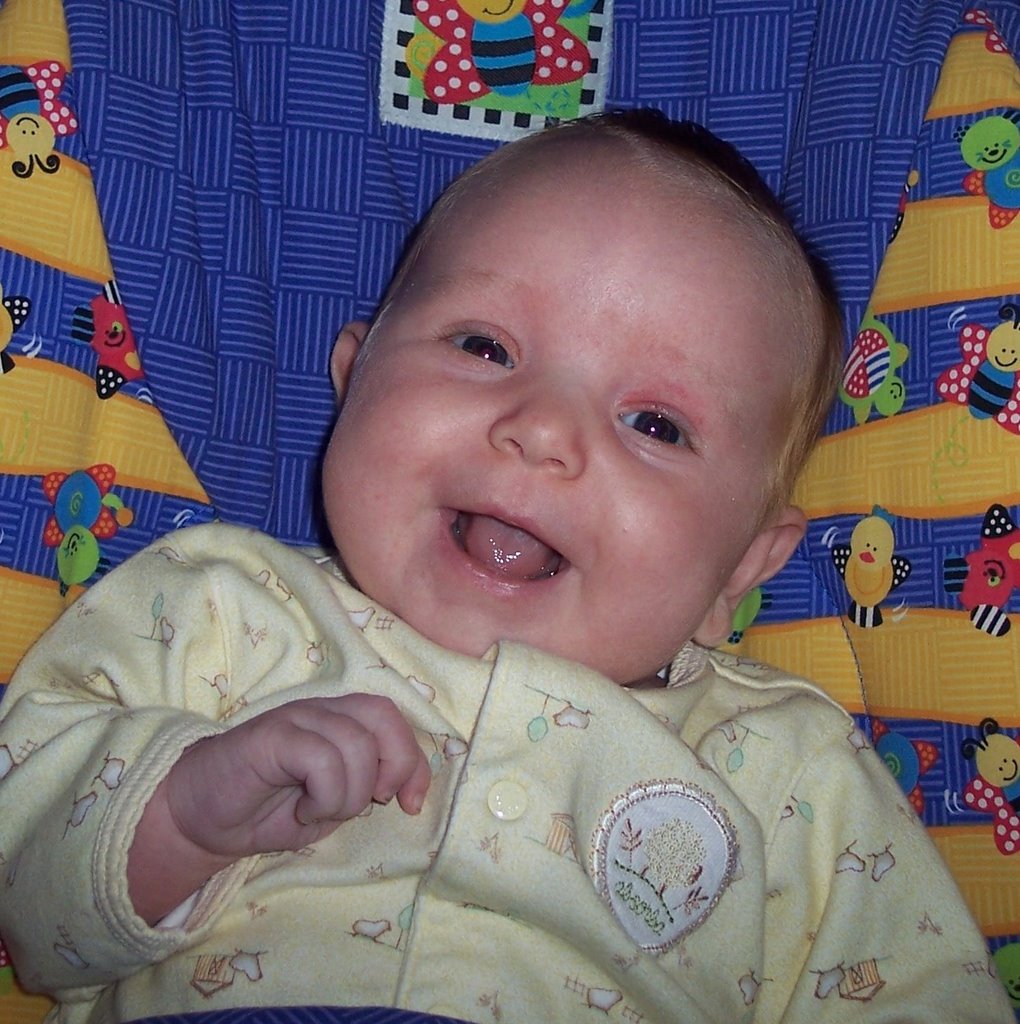
 Maddie is doing really well. She's already 8 weeks old! We just moved her into her own room and she seems to sleep even better when she doesn't get awakened by Dad's snoring all night long. She wakes up once in the night for a "midnight snack" and then goes right back down to sleep until about 6 am. We can't take any of the credit for that - even though she can be real fussy in the evenings, Maddie has always been very good through the night.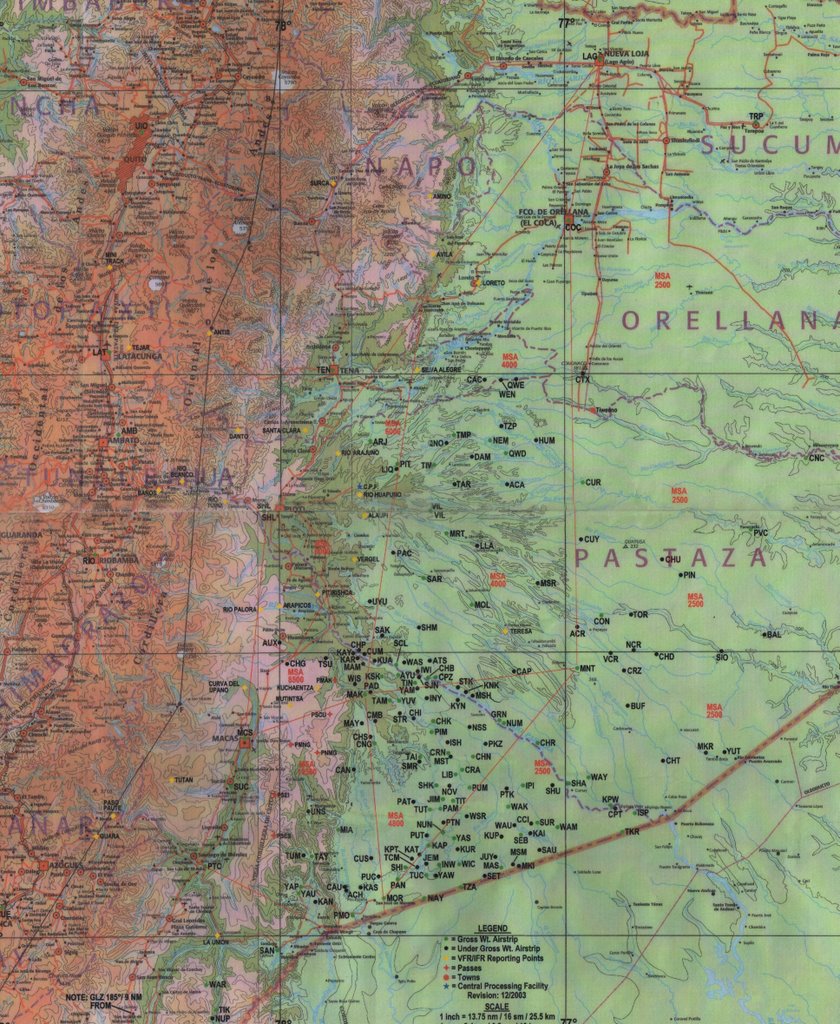
 The men pictured here were the majority of the helpers that we had. Here they had just placed the pole in the ground that holds the antenna. It was stinkin' heavy. The man on the right with the paint on his face is wearing the typical Shuar makeup. He was the only one that I saw wearing the traditional makeup.
 I have said that it rains here right?
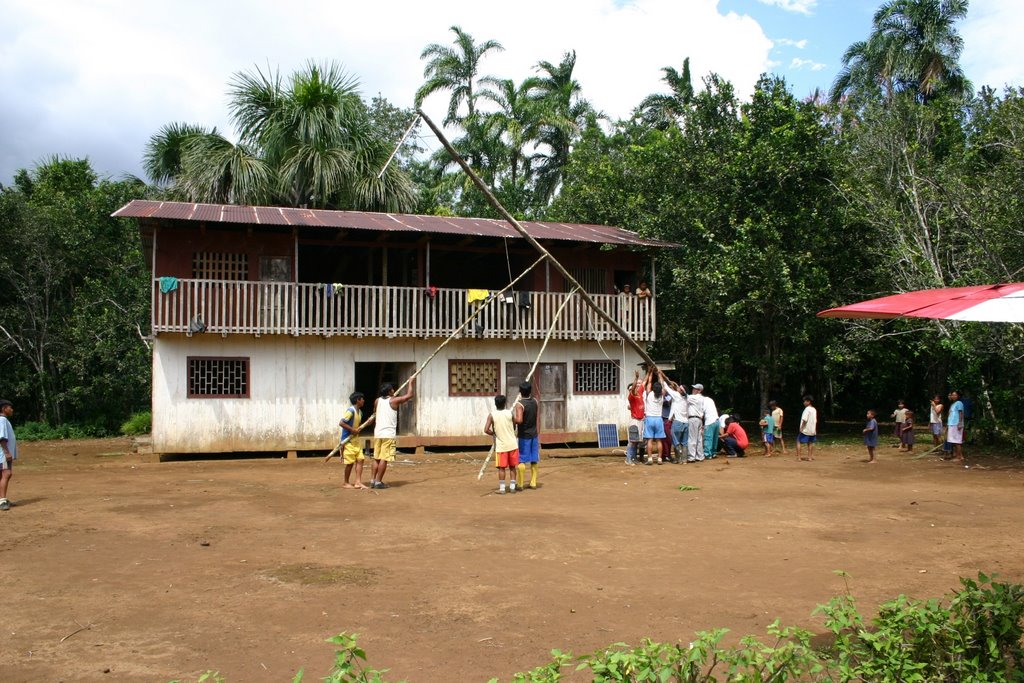 Here we are taking the old antenna down, so we can put a new cable and hardware in. Did I mention that it was heavy?
 What is a good jungle trip without some bug pictures. Many places I have been in the jungle are literally swarming with butterflies. It is a pretty stunning sight. I think these butterflies were licking salt from the dirt.
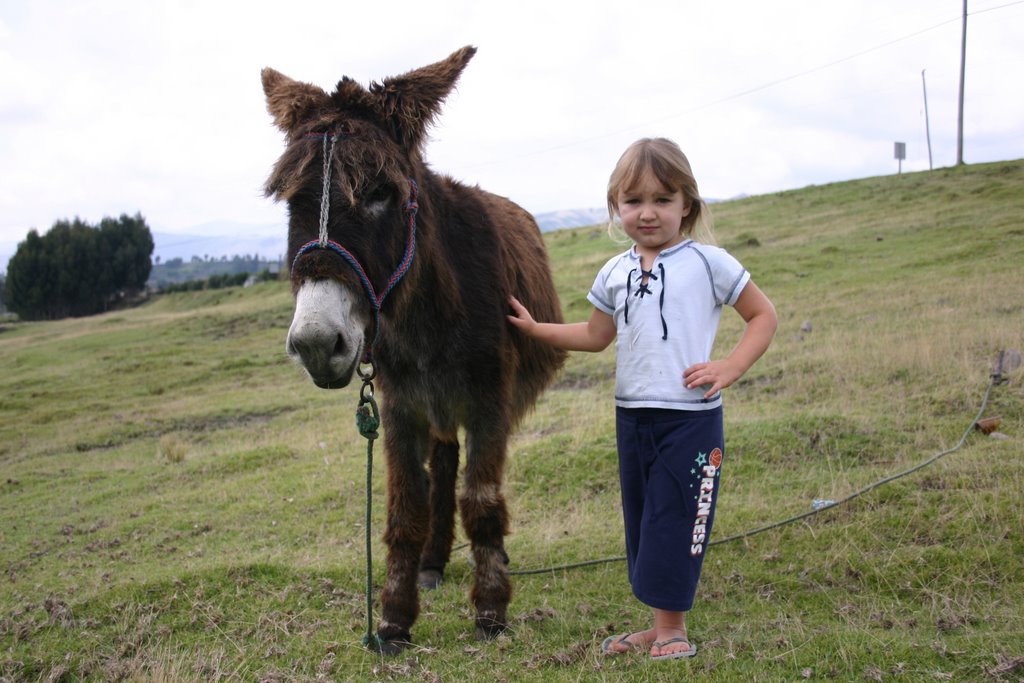 On the way to Cuenca near the place where we ate lunch, Brooklyn was dying to go see the nearby burros and sheep grazing in the nearby pasture. So while everyone was waiting in the restaurant for their food, we snuck off and went and petted the burros. She thought that was pretty cool. They were really woolly also. They average temperature where we were is about 56 degrees year long. Quite a difference from the jungle heat we are used to.
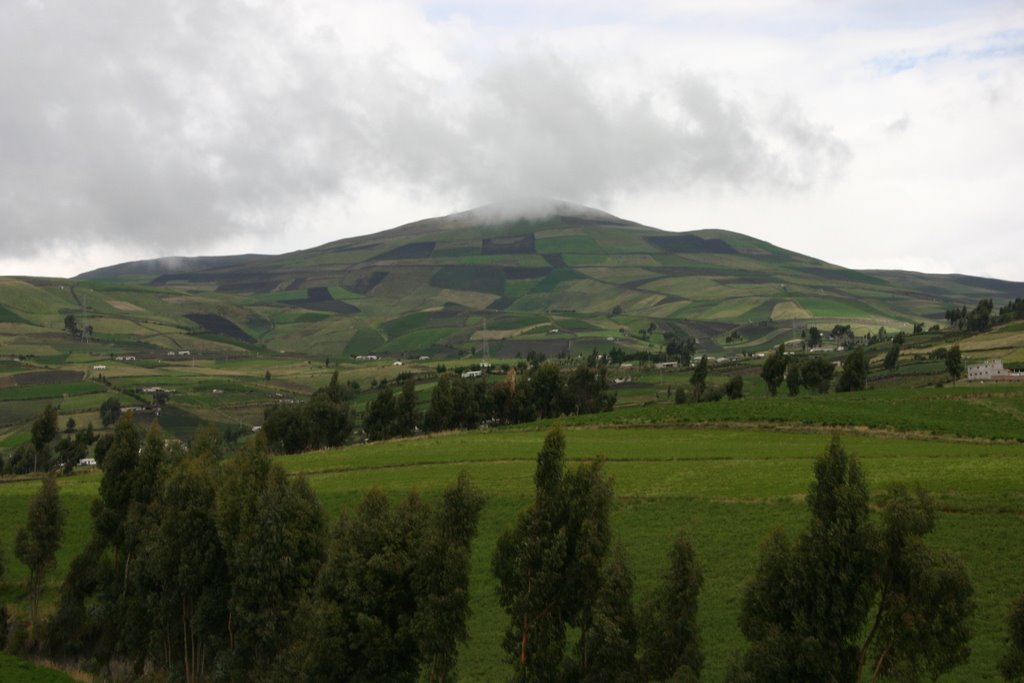 This hill is a good example of the endless patchwork quilt like fields that cover the area. It is amazing where they farm, and that most of it is still done by hand. But is does make for a gorgeous landscape.
 Most of the Andes Mountains from Columbia to Chile are inhabited by one of the world's largest indigenous groups called the Quechua. They are remarkable people, and are as diverse as the countries in which they live. They are incredibly hardworking as noted by the farms above, but most striking to me are the beautiful garb that they wear.

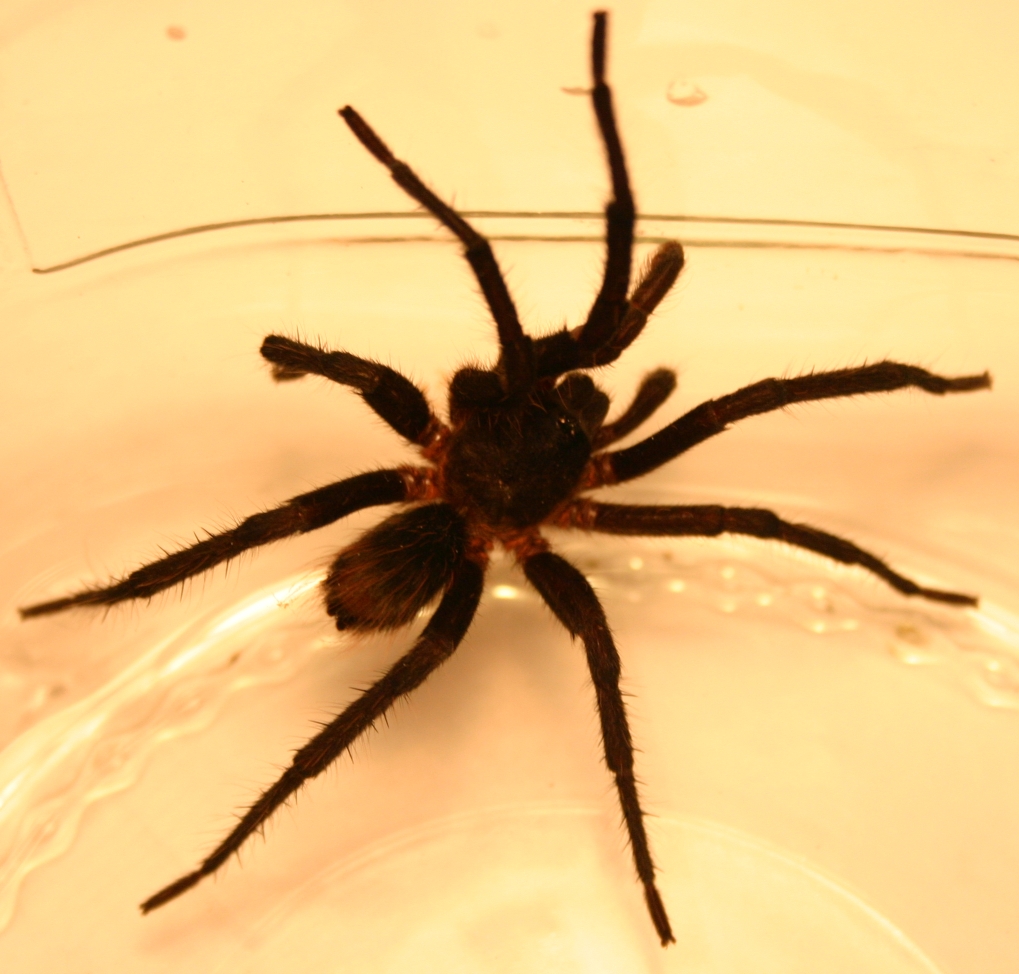 note-This picture is life size :)
 This prop is from a C-130 Hercules that was in Makuma a long time ago. From the picture you can tell that things didn't go to well. It's original intention was to bring a hydro-electric power plant into Makuma, which it did with no problem. Any military operator of the aircraft will tell you of it's short field capability. The problem that this airplane had, occured on taxi. The pilots were taxiing to the end of the runway (it's a "long" runway, about 2400 ft long) in order to take off. Due to the large size of the C-130, the aircraft began to sink into the soft dirt-mud, and became stuck. The pilots tried to use the extra power of the 4 engines to try and get er' unstuck, but what they accomplished instead is kinda funny, in hindsight anyway. At full power trying to turn around, the aircraft wouldn't budge. What happened instead was the hot exhaust from the engines caught the nearby grass on fire, which in turn caught the airplane on fire, and burned it to the ground. No one was hurt, I don't think. I was told that most of the airplane simply melted, and what remained they just hauled off into the nearby jungle, which is where this prop now lies. I had to stomp down a lot of 6 foot tall grass in order to clear the area a bit to get a picture. All of the work in Makuma, including the story of the C-130, is told in a book called "Mission to the headhunters." I have yet to read it myself, although I want to. I have been told it is awesome. (If anyone has read it, let me know what you thought) Makuma is a bible translation hub so to speak, and is one of the oldest airstrips that exist in the jungle.
 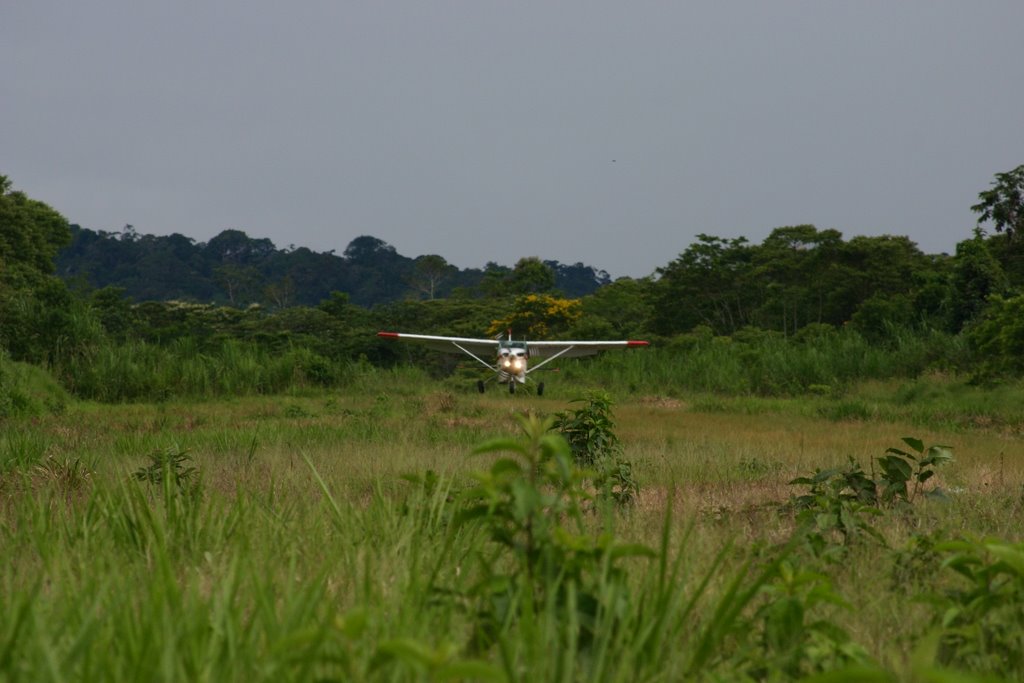 Dan was also flying today, and landed at Makuma bringing in Shuar Bible translators from the distant jungle. I was waiting in Makuma, because Shell was shut down with heavy rain. I was on the ground there about an hour and a half. Once I finally did get a good report from Shell, I still had to divert a long way around a storm cell before turning on course to Shell. Weather is definetly a factor EVERY day here in Ecuador. It isn't like flying in the desert southwest of Colorado.


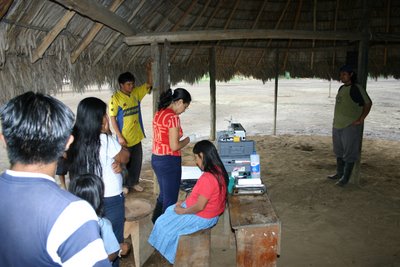 Of the three women on the medical team, one was a doctor, one a nurse, and the one seen here a dentist. Immediatly they had a lot of work to do, and the doctor quickly found two patients that needed more professional help from a hospital. So after spending a little time in Charapacocha, I loaded up my 2 patients, and headed for Shell. 45 minutes later I made my 8th and final landing of the day, and saw my patients to the awaiting ambulance, for a ride to a hospital in nearby Puyo.
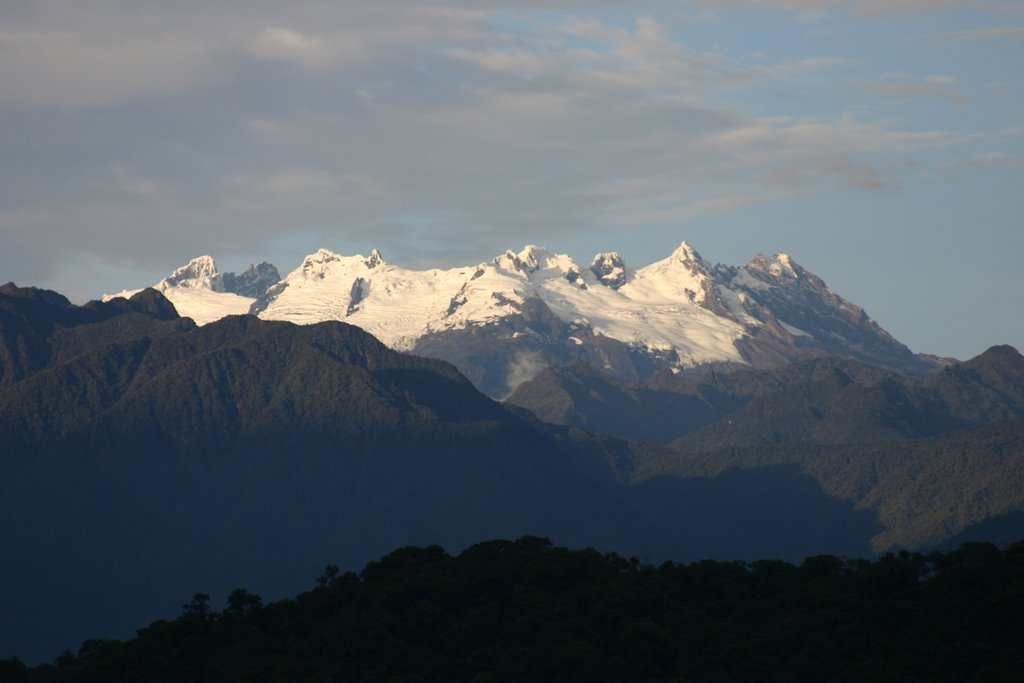 On my way to bible study this morning before work, the sunrise was very powerfull. I have blogged before about the volcanoes, but I thought this pic of El Altar that I took this morning was worth putting on. Remember, almost 18,000 feet tall, and snow capped year round on the equator.
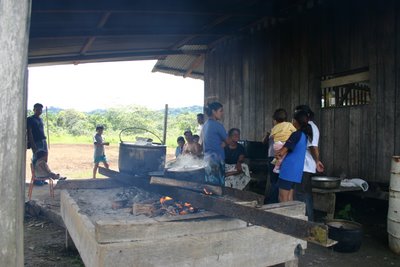


 Here is what school in the jungle usually looks like. It is just a simple wooden building with all the kids from the village inside. They did come out for recess while I was there and there was probably 25 of them, ranging from 1rst grade to 5th. For those of you that were wondering, the flag is the Ecuadorian flag.
The man on the left is the dad of the patient that I brought out. He is walking to the hospital to be with his daughter. He said he should be there by tommorow afternoon. He is holding the boys pet mouse/rabbit thingy. I forgot what they called it in the Shuar language, and I know there is a name in Spanish, but I forgot it as well. The little boys dad is the one with the rifle. It is an old style flint lock gunpowder rifle. I asked them what they were hunting and they said "whatever." And then of course there is the mom with her trusty machete. They use those things for more than you would imagine.
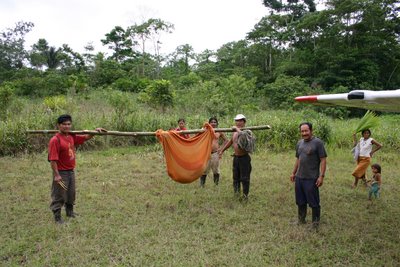

 I got another good glamour shot of my co-pilota. Isn't she cute!
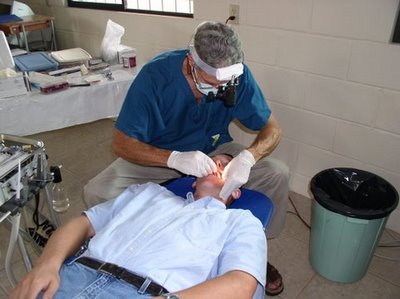
 One more pic looking a little more down the "trap." I think at this point they were telling me a story to keep my mind on other things. If I remember right it had to do with a "surgury" they performed on a dog the previous weekend before coming to Shell. Lucky guy...